
Why I Quit Doing Botox: The Aging Effect Nobody Talks About
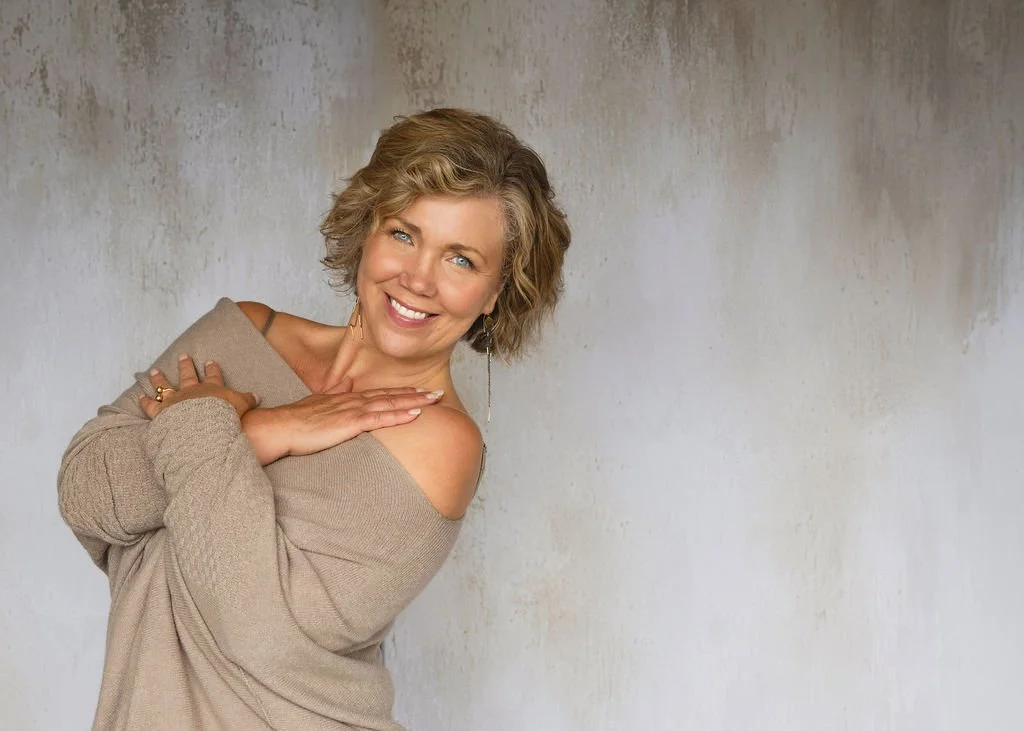
Hi, I’m Amy Wall
Helping you reclaim your natural, radiant face through Quantum Beauty™
✨Why This Anti-Aging Treatment Made Me Look Older
It's not what you think. I'm not going to guilt or shame you into believing Botox is wrong or dangerous or shameful.
In fact, I am pro-Botox when used to treat headaches, extreme sweating, and even dramatic facial expression lines.
You know, the kind of lines you see on someone's face when they have an extremely furrowed brow from worrying too much?
I can imagine what it feels like to wake up every morning, only to look in the mirror and see signs of extreme worry on your face. To think to yourself, "I don't feel worried, so why do I look like I am?".
To those who wake up and feel conflicted about what they see on the outside contradicting what they feel on the inside, I understand.
Growing up, you had a chronic facial expression habit, and now, just like Mother warned, it's stuck that way.
✨Is Botox Safe? The Science Behind Botulinum Toxin
According to Medical News Today, Hannah Nichols writes:
Botox is a drug made from a neurotoxin produced by the bacterium Clostridium botulinum called botulinum toxin. It is used medically to treat certain muscular conditions and cosmetically remove wrinkles by temporarily paralyzing muscles.
Botulinum toxin can be injected into humans in tiny concentrations and works by preventing signals from the nerve cells reaching muscles, leaving the muscles without instructions to contract, therefore paralyzing them.
For muscles to contract, nerves release a chemical messenger, acetylcholine (a neurotransmitter), at the junction where the nerve endings meet muscle cells. The acetylcholine attaches to receptors on the muscle cells and causes the muscle cells to contract or shorten. Injected botulinum toxin prevents the release of acetylcholine, preventing contraction of the muscle cells.
Essentially, botox acts like a microscopic dam, blocking off the pathway between your nerves and your muscles before the "contract muscles" command reaches its final destination.
Scientists call this temporary paralysis.
Botox is also a completely natural substance, not a man-made chemical compound.
Nichols continues,
"Clostridium botulinum like most drugs has an entirely natural origin. [It is] found in the inactive form in the natural environment, including in the forest and cultivated soils, and in the sediment of lakes, streams, coastal and untreated waters. Such naturally occurring instances of Clostridium botulinum bacteria and spores are typically relatively harmless. Problems only usually arise when the spores transform into vegetative cells, and the cell population increases to the point where the bacteria begin producing botulinum toxin, the deadly neurotoxin responsible for botulism.
'Only the dose makes a remedy poisonous.'"
The science is safe, and the drug is safe. (As long as it isn't black market or used for off-label purposes.)
So, why am I swearing it off?
✨The Botox Face Effect: Why It Actually Makes You Look Older
It made me look old. Yes, you read that right, I think it makes me look old.
I've been developing a theory that Botox is one of the most aging things you can do to your face.
"Botox face" is becoming the look of women that are 35-75, and it is a dead giveaway that you are afraid of aging. Botox face looks like a forehead that is smooth, tight and shiny. Botox face is having eyebrows arched so high that you look perpetually surprised, or hanging lower on your face, pushing your eyelid skin down. What causes these differing effects? It's all about where it's injected, and even a millimeter too high or low will give you these effects.
This look is becoming an unconscious cue of age. Now this smooth, tight look is associated with aging women.
Look at women that are 28-33. Check out their smiling faces. They have movement, they have eye crinkles, they have an energy of joy when they smile. That is what youth looks like.
What happens when you freeze the muscles of your forehead when you smile? The muscles around your eyes contract instead. What happens when you freeze the muscles around your eyes too? The muscles in your upper cheeks contract and squeeze the skin under your eyes (causing more wrinkles). Then you freeze your upper cheek muscles, and so on and so on. It's not a strategy for looking beautiful. To me, it's a slippery slope of perpetually being dissatisfied with the way we look.
When we get used to seeing our faces artificially smooth, we lose touch with what needs attention. If you keep chasing the muscles around your face trying to freeze them all, you end up distorting your face and losing touch with the naturally beautiful planes and curves of the human face!
Some women get trapped in this vicious spiral and even consider undergoing surgery to fix the non-paralyzed portions of their faces that look like sagging cheeks or eyelids. At this point, if you visit a surgeon to see if you are a candidate for blepharoplasty (eyelid surgery), don't be surprised when the doctor says yes.
✨Why I Stopped Doing Botox: My Personal Story
This is actually my story.
It happened to me.
I was in the surgeon's office hoping she would tell me it was all in my mind, that I didn't need surgery to make my eyelids less droopy.
Instead, she said, yes, I had excessive eyelid skin and she would be happy to fix that for me.
I went home devastated. This happened at a time when I was struggling personally and professionally and coming to terms with my middle-agedness. After carefully considering what she said and what I was intuiting, I came to realize that it wasn't my middle-agedness taking a toll on my face. It was the few years I spent having my brows artificially depressed by Botox making my eyelids appear saggy!
I decided to scrap the injections and practice what I preach with skin care products, increased facial massage, and an extra big dose of Self-Love.
AND IT WORKED! My eyelids are no longer the tiniest bit saggy.
✨What Happens When You Stop Botox
Think about it: The only exercise our face gets is from our emotions.
Picture an upper arm that hasn't been exercising. It's crepey and saggy.
Now, imagine the arm of someone who moves their body often—that arm has blood pumping, muscles moving and cells that are oxygenated. Yep, the same is true of our faces.
I feel like I stumbled on the fountain of youth with this revelation.
Could it really be this simple? Yes!
When you stop Botox, your facial muscles gradually regain their ability to contract and move.
The paralysis wears off over 3-6 months.
Your face doesn't return "worse than before"—it simply returns to its natural state.
But here's what most people don't realize: if Botox was artificially affecting your muscle structure (like depressing your brows), you might discover distortions that the treatment itself created.
✨How to Quit Botox Naturally: Facial Massage and Intentional Touch
Now, if you are picturing complicated face yoga, don't worry, I wouldn't do that to you.
My facial exercises are like CrossFit for the face.
Maximum efficacy for minimal time investment. I take that back; it's not like CrossFit because you won't be exerting yourself at all!
The first shift occurs when you start touching your face with intention.
Feel your face. Feel how your fingers find the hollows and curves.
Now press in.
Feel around. That's it!
This simple Skintuitive practice restores blood flow, wakes up dormant muscles, and helps your face remember how to move naturally.
Combined with skincare products that actually support skin health and a big dose of self-love, this is how you reclaim your natural beauty.
✨When Botox Might Be Worth It (And When It's Not)
Now, back to Botox. When is it okay?
If you've gone too long without loving up your face, you may look in the mirror to find a permanent scowl, even when you don't feel scowly.
This could be the time to use some Botox to help re-train that chronic facial expression.
But you can't rely on Botox alone.
You are the missing ingredient. Spend some time noticing when you're making these facial movements, and commit to training yourself to stop that habitual action. Spend some time contemplating the emotions you feel when you make this face. Is this emotion serving you?
If this idea resonates with you, the Botox can help jumpstart the process.
I recommend a few rounds of it and when you see some improvement, take a break and see where you are.
Alternatively, you can take the road less traveled and use energy and your self-image to completely change the way you relate to your face.
And quit Botox for good. I teach exactly how do that here >> How To Quit Botox
Either way...
You are beautiful.
Love, Amy
✨FAQ: Quitting Botox
What happens when you quit Botox?
When you stop Botox, your facial muscles gradually regain their ability to contract. The lines and wrinkles that were smoothed by the injections will slowly return to their natural state over 3-6 months. Your face won't look worse than before you started—it simply returns to its baseline. However, if Botox was artificially depressing certain muscles (like your brows), you may notice distortions like saggy eyelids that were caused by the treatment itself, not by aging.
How long does it take for Botox to wear off completely?
Botox typically wears off completely within 3-6 months after your last injection. The timeline varies based on your metabolism, how much Botox was used, and where it was injected. You'll notice gradual changes as muscle movement returns. Some people metabolize it faster, others slower.
Will my wrinkles be worse after stopping Botox?
No. This is a common myth. When you stop Botox, your wrinkles return to their natural state—not worse than before you started. However, you may perceive them as "worse" because you've become accustomed to seeing your face artificially smooth. The key is reframing your relationship with your natural face and understanding that expression lines are normal and human.
Does Botox make you age faster?
Paradoxically, yes—in an indirect way. When you freeze facial muscles, surrounding muscles compensate by working harder, creating new wrinkles in different areas. The frozen, shiny forehead also becomes a visual cue that reads as "older woman trying to look younger" rather than actual youth. Real youth has movement, expression, and energy in the face. Look at women in their late 20s and early 30s—they have eye crinkles when they smile, expressive faces, and natural movement. That's what youth actually looks like.
How can I quit Botox naturally?
Start with facial massage to restore muscle tone and blood flow. Touch your face with intention—find the hollows and curves, press in, feel around. This "exercise" for your facial muscles helps them regain strength after being paralyzed. Combine this with skincare products that support actual skin health (not just surface smoothing) and a big dose of self-love. Learn to see your natural face as beautiful rather than broken. The transformation happens when you stop fighting your face and start caring for it.
Do you still approve of Botox for dramatic facial lines?
NO.
When I first wrote this article in 2017, I will admit that I softened my message. I said I was pro-Botox for certain situations because I did not want anyone to feel judged or turned off.
But over the last nine years, my perspective has completely evolved.
I have watched the long-term physical and energetic effects of cosmetic injections on hundreds of faces. I have seen how freezing our muscles, even just a little bit, slowly disconnects us from our own facial landscape.
Today, I am no longer interested in softening the truth to make the beauty industry feel comfortable. You do not need to freeze your face to be beautiful, and you do not need to paralyze your muscles to look young. We can lift, sculpt, and tend our faces naturally.
For more research on the harmful effects of cosmetic injectables, visit NeverTox (external resource)
